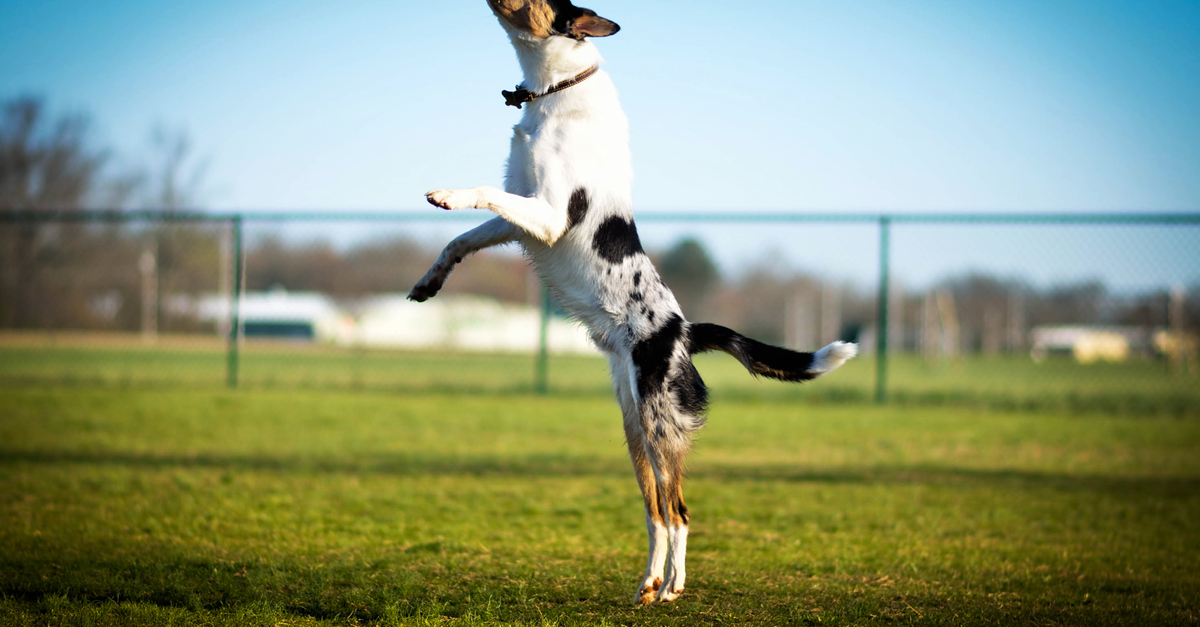
Picture this: The doorbell rings, your heart sinks a little, and before you can even reach the door, your otherwise well-behaved dog transforms into a furry missile, launching themselves at your arriving guest. Their paws land on clothes, muddy prints appear, and apologies spill from your lips while your dog, oblivious, wags their tail, convinced they’re offering the warmest welcome ever. Sound familiar? In my years as a dog trainer, this scenario is one of the most common—and frustrating—challenges pet parents face.
Most owners think their dog is just too excited or dominant, and they try yelling, pushing the dog down, or even kneeing them. The problem? These common reactions often make the jumping worse, or at best, create a dog who just avoids jumping on you but still assaults your friends. The truth is, your dog isn’t jumping to be naughty; they’re operating on a different wavelength entirely. What changed everything for me, and for the hundreds of clients I’ve worked with, was understanding the real motivation behind the jump and implementing a strategic, consistent approach that taps into how dogs actually learn.
Key Takeaways
- Your dog jumps for attention and perceived rewards, not dominance or pure naughtiness.
- Traditional deterrents like pushing or yelling often inadvertently reinforce the jumping behavior.
- Consistency is paramount: Every interaction with every person is a training opportunity.
- Proactive management, such as leashing your dog before guests arrive, is crucial for success.
The Real Reason Your Dog Jumps (It’s Not What You Think)
The biggest mistake I see most often is misinterpreting the dog’s intent. When your dog jumps, it’s rarely about dominance or a deliberate attempt to be disobedient. Instead, it boils down to two primary motivators: attention and proximity for scent/social cues.
Think about it from your dog’s perspective. When a new person enters their space, they’re a giant, fascinating creature. Dogs greet each other nose-to-nose, but humans are tall. To get to what they perceive as the ‘face’ or ‘greeting zone,’ they jump up. More importantly, when they jump, what’s often their reward? Even negative attention is still attention. A push, a spoken ‘no,’ a startled gasp, or even eye contact—all of these can be interpreted by your dog as a form of engagement. In their mind, ‘jumping = interaction.’ If it worked once, they’ll try it again.
I had a client, Sarah, with a boisterous Golden Retriever named Buddy. Sarah would constantly tell Buddy ‘off!’ and push him down when he jumped. Buddy would usually drop, but as soon as her friend moved, he’d be up again. When we analyzed it, Buddy wasn’t being disobedient; he was in a constant loop of seeking attention. Sarah’s ‘no’ was actually a command to disengage momentarily, but the underlying desire for interaction was still being fueled. We needed to change the value of jumping.
The Counter-Intuitive Strategy: Removing the Reward (and Replacing It)
If jumping is about getting attention, the solution is simple, yet often counter-intuitive: remove the attention. This means absolutely no interaction when your dog is jumping. The moment all four paws are on the floor, that’s when the positive reinforcement comes in.
Here’s how I instruct my clients:
- Turn Away Completely: The instant your dog’s paws leave the ground, turn your back. Fold your arms. Look at the ceiling. Become a tree. Make yourself utterly boring and unengaging. Do not make eye contact, do not speak, do not push them down.
- Wait for All Four Paws Down: The millisecond your dog has all four paws on the floor, even if only for a split second, turn back and offer a calm, quiet praise (e.g., ‘Good settle,’ ‘Yes, good dog’) and a gentle, brief pet on the chest or under the chin – places they can’t jump up to reach. The key is brief and calm.
- Repeat and Be Relentless: If they jump up again, immediately turn away. This is not a punishment; it’s simply a clear signal: ‘Jumping makes me disappear. Four on the floor makes me accessible.’
This method works because it directly addresses the dog’s motivation. Jumping no longer yields the desired outcome (attention). Keeping four paws on the floor does. It’s a powerful and clear lesson that takes patience but is incredibly effective. Emily, another client with a notoriously jumpy Lab, saw significant progress within a week of consistent application. The initial visits from friends were a lot of ‘human trees,’ but soon, her dog learned the new rules.
The Power of Proactive Management: Setting Your Dog Up for Success
Removing the reward is vital, but so is preventing the behavior from happening in the first place, especially during those high-excitement moments like guest arrivals. This is where proactive management becomes your best friend. In my experience, relying solely on reactive training (turning away after the jump) is like trying to plug a leaky dam with a single finger.
Here’s a multi-pronged approach to manage the situation before it escalates:
- Leash Them Up: Before the doorbell even rings, have your dog on a leash. This gives you immediate control without having to physically push them. When the guest arrives, hold the leash loosely. The moment your dog tries to jump, gently but firmly guide them back down with the leash. Don’t yank, just guide. The instant all four paws are on the floor, praise softly, and the guest can offer a calm pat.
- The ‘Place’ Command: If your dog knows a ‘place’ command (sending them to their bed or mat), utilize it. Ask them to go to their place before guests arrive. Reward them for staying. If they break, gently lead them back. This teaches them to control their impulses even with exciting distractions.
- Crate or Separate: For dogs that are truly over-the-top, crating them or putting them in another room with a long-lasting chew toy (like a Kong stuffed with peanut butter) for the first 5-10 minutes of a guest’s arrival can be a game-changer. Once they’ve settled, you can bring them out on a leash for controlled greetings. This isn’t punishment; it’s preventing them from practicing the unwanted behavior.
I remember working with the Petersons, whose energetic Border Collie mix, Rusty, would launch himself at visitors with such force that he’d almost knock them over. We started with leashing him every single time someone came over. It felt tedious at first, but within a few weeks, Rusty learned that the leash meant ‘keep four on the floor’ during greetings. This proactive step dramatically reduced the number of jumping incidents, making the reward-removal strategy far more effective.
Consistency is Non-Negotiable: The ‘Every Time, Every Person’ Rule
This is perhaps the single most critical factor that distinguishes success from failure in stopping jumping. Dogs are creatures of habit and patterns. If you only implement the ‘turn away’ or ‘leash’ strategy sometimes, or if some family members are stricter than others, you’re sending mixed signals. In your dog’s mind, ‘sometimes jumping works, sometimes it doesn’t’—which means they’ll keep trying.
Every single person who interacts with your dog must be on the same page. This includes your spouse, children, grandparents, friends, and even the Amazon delivery driver if they’re willing to cooperate (a note on the door can work wonders). If your dog jumps on your child, and your child pushes them off, that’s still attention. If your spouse tolerates a little jump, that’s still reinforcement.
In my experience, the families who commit 100% to this consistency see results quickly. The ones who struggle are those with one family member who ‘feels bad’ or ‘forgets’ sometimes. I worked with a family whose teenage son kept letting their puppy jump on him. The puppy learned that while Mom and Dad were strict, the son was a reliable source of attention via jumping. Once the entire family committed to the protocol, the jumping stopped almost overnight.
Make a family plan. Post a reminder on the fridge. Have a quick chat with guests before they come in. Explain: ‘Please ignore Fido if he jumps. He’ll get attention when all four paws are on the floor.’ This collective effort is what solidifies the new behavior.
Beyond the Door: Generalizing Calm Greetings
Stopping jumping at the front door is a huge win, but your dog might still jump when you arrive home, when you wake up, or even when you just stand up from the couch. The principles remain the same: remove the reward for jumping, reward for calm.
- Coming Home: When you walk in the door, if your dog is overly excited and jumps, drop your keys, purse, whatever you’re holding, and immediately turn your back. Wait for calm. The instant all four paws are on the ground, offer a calm greeting. Don’t engage in a huge, excited reunion until they’re settled.
- Waking Up/Standing Up: Many dogs jump when their owner gets out of bed or stands up from a chair. Again, if they jump, disengage. Move away, turn your back, go into another room if necessary. Re-engage only when they are calm and have all four paws on the floor. This teaches them that movement doesn’t automatically mean ‘jump party.’
- Training a ‘Sit’ for Greetings: Once your dog reliably understands that jumping doesn’t work, start actively training a ‘sit’ for greetings. Ask for a sit when a guest approaches (while still using the leash or boundary if needed). Reward the sit. This gives them an alternative, polite behavior to offer instead of jumping.
Generalizing the behavior means applying the rules in all contexts, not just at the front door. This shows your dog that ‘four on the floor’ is the universal rule for polite interactions with humans. It takes time and dedication, but the payoff is a dog who confidently and calmly greets everyone, everywhere.
Frequently Asked Questions
Q: My dog is small, so their jumping isn’t really a problem. Should I still stop it?
A: Yes, absolutely. Even small dogs can scratch, tear clothes, or be a tripping hazard, especially for children or the elderly. More importantly, it teaches your dog that jumping is an acceptable form of greeting, which can escalate if they ever meet a larger dog or if a small jump still causes issues. Consistency applies to all sizes.
Q: What if my dog is too excited to calm down when I turn my back?
A: This is where proactive management (like using a leash, place command, or temporary separation) is crucial. If turning your back isn’t enough, it means the dog is too over-threshold. Use the leash to prevent the jump, or separate them until they are calmer. Then, try the ‘turn away’ method in a lower-stimulation environment, gradually increasing the distractions.
Q: My dog jumps and nips. How do I stop both?
A: The same principles apply. The nipping is often an extension of the excitement and attention-seeking. Remove all attention the moment they jump or nip. If the nipping is painful, a quick, sharp ‘ouch!’ followed by immediate disengagement (turning away, leaving the room) can be effective. Again, proactive management, like leash control during greetings, is vital to prevent the behavior before it starts.
Q: How long does it take to stop a dog from jumping?
A: The timeline varies significantly depending on the dog’s age, how long the behavior has been reinforced, and the consistency of the training. Some dogs show improvement in days or weeks, while others with a long history of jumping may take months of diligent effort. The key is never to give up and to maintain absolute consistency.
Q: Is it okay to use a spray bottle or other deterrents?
A: In my experience, these types of deterrents are often counterproductive. They can create fear, anxiety, or distrust in your dog, and they don’t teach the dog what to do instead. They also only work when the deterrent is present, meaning your dog doesn’t learn self-control. Focusing on removing the reward and teaching an alternative behavior (like sitting calmly) builds a much stronger, more reliable foundation.
Conclusion: Patience, Consistency, and Understanding
Stopping your dog from jumping on guests isn’t about dominance or force; it’s about understanding your dog’s motivations and consistently communicating the behavior you do want to see. By removing the reward for jumping and diligently reinforcing calm, four-on-the-floor greetings, you’re not just correcting a behavior; you’re teaching your dog a more polite and effective way to interact with the human world. It requires patience, unwavering consistency from everyone involved, and a commitment to setting your dog up for success. But the reward—a calm, respectful greeting from your furry family member—is absolutely worth the effort. Start today, and reclaim your peace at the front door.