A new puppy owner once told me crate training “just didn’t work” for her Vizsla, who cried constantly and had started using the crate as a bathroom despite being otherwise fully house-trained. Within about ten seconds of seeing the crate, I understood why: it was sized for the dog’s projected adult weight, roughly triple the size the eight-month-old puppy actually needed at the time. A crate that large gave the puppy enough room to sleep in one corner and eliminate in the other, which completely defeats the den-instinct principle that makes crate training work in the first place. This is, by a wide margin, the most common setup mistake I see, and it’s rarely the owner’s fault — crate sizing charts on packaging are notoriously oriented around adult weight with little guidance on the actual principle behind the sizing.
Key Takeaways
- The correct crate size lets a dog stand, turn around, and lie down comfortably — nothing more. Extra room actively undermines house training.
- For growing puppies, a divider panel lets you size the crate correctly at every growth stage without buying multiple crates.
- Wire crates, plastic travel crates, and soft-sided crates each suit different needs — the “best” type depends on your dog’s behavior, not a universal ranking.
- Crate placement in the home affects success as much as the crate itself; an isolated crate often increases anxiety rather than providing security.
Why Crate Size Is the Make-or-Break Variable
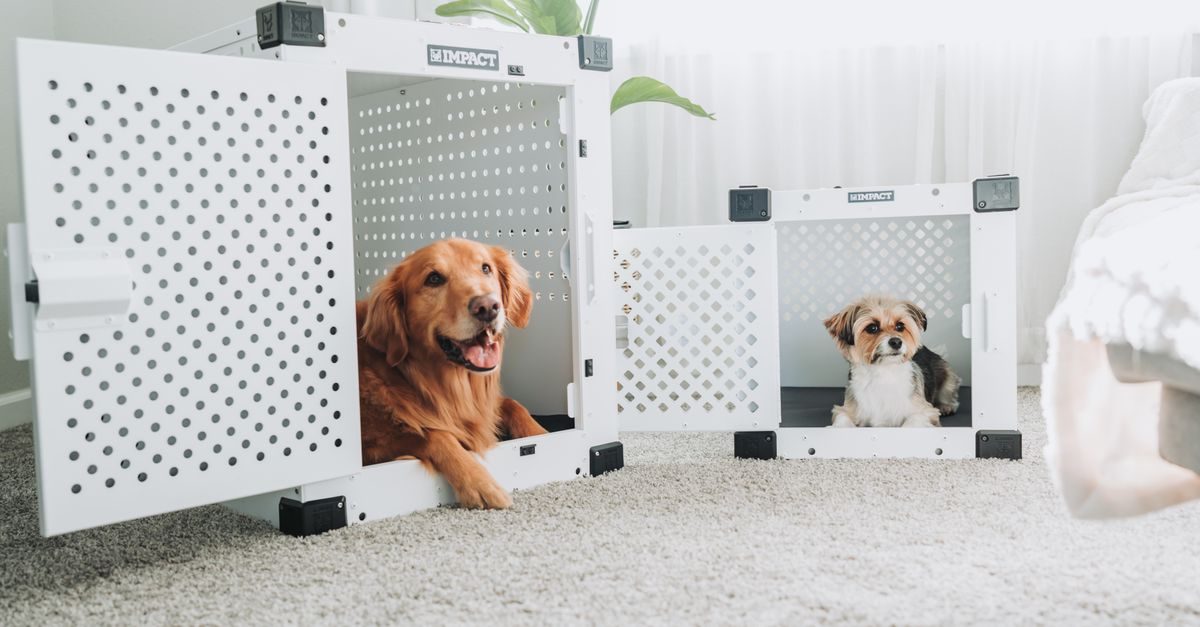
The entire logic of crate training rests on a dog’s natural instinct not to eliminate where they sleep — a den-preservation behavior inherited from wild canid ancestors who kept their sleeping area clean to avoid attracting predators through scent. A crate sized correctly, just large enough to stand, turn around, and lie down comfortably, taps directly into that instinct and is a major reason crate training accelerates house training so effectively.
An oversized crate breaks this mechanism entirely. With enough extra space, a dog can designate one end as a bathroom and the other as a sleeping area, completely bypassing the instinct the crate is supposed to leverage. This is precisely what happened with the Vizsla puppy — the crate wasn’t too small or poorly made, it was simply too large for the job it needed to do at that life stage.
Actionable insight: Measure your dog from nose to base of tail (not including the tail) and from floor to top of head or ears while standing, then choose a crate that adds only 2-4 inches of buffer in each dimension — not the largest crate that will physically fit in your space.
The Divider Panel Solution for Growing Puppies
Buying a crate sized for an eight-week-old puppy means replacing it multiple times before adulthood, which is expensive and wasteful. The better solution, and one I recommend to nearly every puppy owner, is buying a crate sized for the dog’s projected adult size upfront, but using a divider panel (most quality wire crates include one, or sell them separately) to section off the extra space as the puppy grows.
This gives you the sizing accuracy that makes crate training effective at every stage, without needing to purchase three or four crates over a dog’s first year. Adjust the divider every few weeks as the puppy grows, always erring toward slightly too small rather than too large if you’re between measurements — a snug fit is far less disruptive to training than excess space.
Actionable insight: When buying a puppy’s first crate, purchase for projected adult size with a divider panel included, and plan to move the divider roughly every 3-4 weeks during the primary growth period rather than guessing at a single “growing room” size upfront.
Matching Crate Type to Your Dog’s Actual Behavior
Wire crates offer the best ventilation and visibility, which most dogs tolerate well, and they typically fold flat for storage or travel. They work well for the majority of dogs but can feel too exposed for anxious dogs who benefit from a more enclosed, den-like feeling — a crate cover (a simple blanket draped over three sides) often resolves this without needing a different crate entirely.
Plastic travel crates (often airline-approved) offer more enclosed, den-like security by default and are required for air travel, but have less ventilation and visibility, which some dogs — particularly those prone to overheating or already comfortable with open spaces — find less comfortable for everyday home use.
Soft-sided crates are lightweight and portable, ideal for travel or temporary use, but are a poor choice for dogs who chew, scratch, or are still being crate trained, since they offer no containment against a determined escape attempt and can pose an injury risk if a dog tries to break through mesh panels.
Actionable insight: Match crate type to your dog’s specific tendencies: wire with a cover for most dogs, plastic travel crates for anxious dogs or air travel needs, and soft-sided crates only for fully crate-trained, non-destructive dogs who need portability.
Placement Matters as Much as the Crate Itself
Where you put the crate significantly affects how a dog responds to it. A crate isolated in a garage, basement, or far corner of the house tends to increase anxiety, since dogs are a social species and being separated from the family, especially early in training, can undermine the sense of security the crate is meant to provide. I generally recommend placing the crate in a common living area initially — a corner of the living room or bedroom — where the dog can still see and hear the family, then potentially relocating it once the dog is fully comfortable and trained, if a different long-term location is preferred.
Avoid placing a crate in direct sunlight, near heating or cooling vents, or in a high-traffic walkway where the dog is frequently disturbed while resting. The crate should be a genuinely calm, low-stimulation space, not one that’s either isolating or constantly interrupted.
Actionable insight: Start crate placement in a shared family space for the first several weeks of training, away from direct sun, vents, and high foot traffic, and only relocate once the dog shows consistent comfort and calm settling behavior in the crate.
Signs Your Current Crate Setup Needs Adjustment
If a house-trained dog starts eliminating in the crate, an oversized crate is one of the first things to rule out, alongside a medical check to eliminate urinary issues. If a dog paces, whines persistently, or refuses to settle, consider whether the crate is too exposed (try a cover) or too isolated (try relocating closer to family activity). If a dog is actively trying to escape or has damaged the crate, a wire or heavy-duty option may be needed instead of a soft-sided crate, alongside addressing any underlying separation anxiety directly rather than just upgrading the hardware.
Actionable insight: Treat persistent crate struggles as a diagnostic puzzle with three variables to check in order: size accuracy, placement, and crate type — rather than assuming the dog simply “doesn’t like crates,” which is rarely the actual root cause.
Frequently Asked Questions
How do I know if my puppy’s crate divider needs adjusting?
If your puppy can comfortably turn a full circle with a few inches to spare and lie fully stretched out, the size is likely right for their current stage. If they’re cramped when standing or turning, move the divider to add space; if there’s room for a distinct “bathroom corner,” reduce it.
Should the crate door be open or closed during the day?
Once house training is progressing well and the dog is comfortable, leaving the door open during supervised time lets the crate become a voluntary safe space rather than only a confinement tool, which strengthens the positive association long-term.
Is it cruel to crate a dog while at work?
A properly sized, positively introduced crate used for reasonable durations (generally no more than 4-6 hours for an adult dog, less for puppies) is a widely supported management tool, not a cruelty concern, provided the dog has adequate exercise, bathroom breaks, and isn’t showing signs of distress.
My dog whines the moment I put them in the crate. What does that mean?
This is common early in training and doesn’t necessarily indicate a problem, but persistent whining beyond the first couple weeks warrants a check of size, placement, and whether crate introduction was rushed. Gradual, positive reintroduction usually resolves it.
Can an adult dog who’s never been crate trained still learn it?
Yes, though it typically takes more patience than with a puppy. Start with very short, positive sessions with the door open, building duration gradually, and never use the crate as punishment at any point in the process.
The right crate is boring by design — correctly sized, appropriately placed, and matched to your dog’s actual temperament rather than the biggest or most feature-packed option available. Getting those fundamentals right solves more crate training problems than any product upgrade.